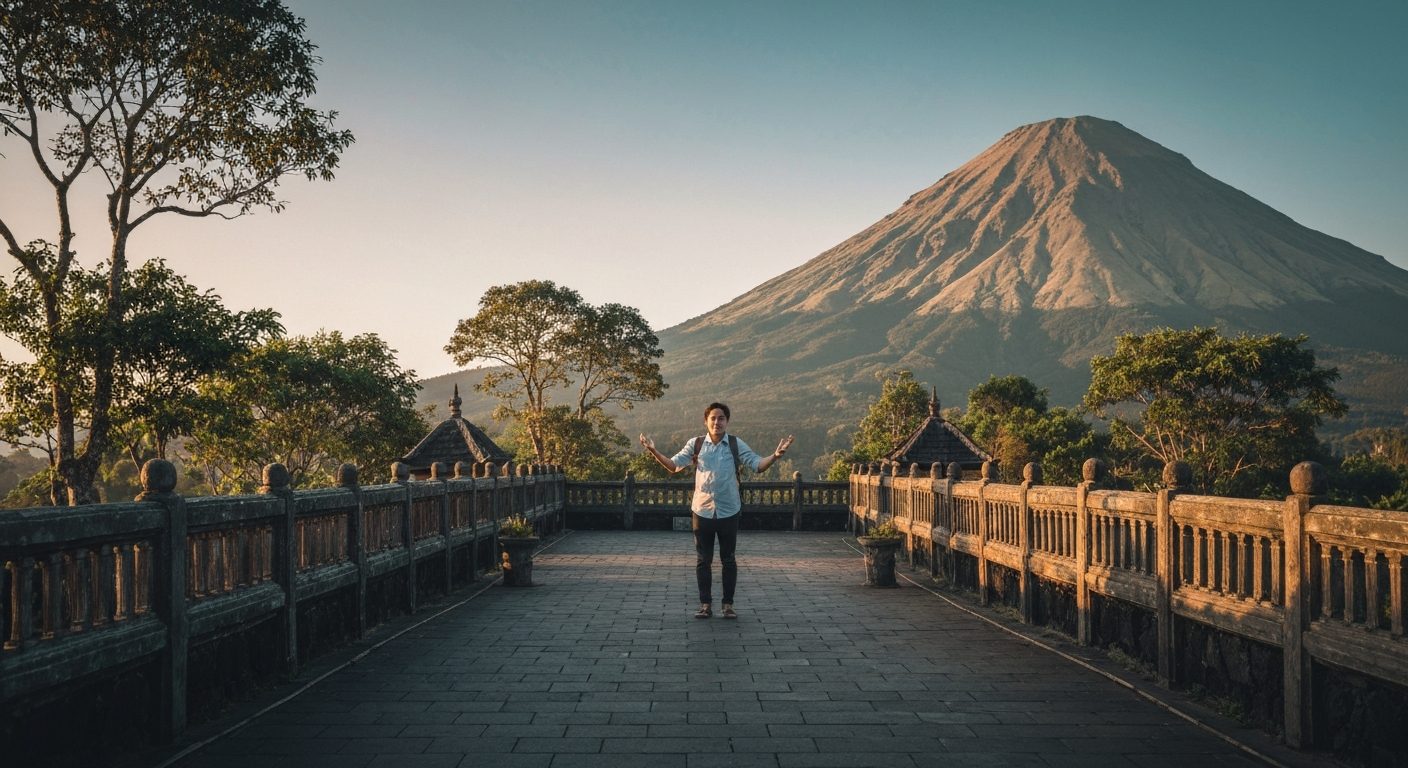
A bali java tour what to pack list starts with layers for cold volcano sunrises, grippy shoes for slippery paths, and a few safety items you won’t find in most hotel rooms. This guide walks you through exact essentials for Bromo, Ijen, Borobudur and Tumpak Sewu so you can pack once in Bali and be ready for Java.
Java From Bali is run by Bali Premium Trip, a Bali-based concierge founded in 2015. Our team is in the mountains several times a month, and we design combined Bali–Java trips for all fitness levels. We don’t own the jeeps or park concessions at Bromo or Ijen; we arrange licensed local guides, drivers and permits for you, and you book directly with our reservations team at transparent, published rates.
—
Overview: What This Packing List Is For
Most people doing a Bali + Java circuit follow some version of this route:
- Fly or drive from Bali to East Java
- Sunrise at Bromo
- Night hike and sunrise at Ijen
- Optional Tumpak Sewu waterfall stop
- Continue on to Yogyakarta for Borobudur and Prambanan
- Return to Bali or onward
The environments on this circuit swing wildly:
- Volcano rims at 2,300–2,800 m can feel close to freezing before sunrise.
- Midday on the caldera floor can be hot and dusty.
- Ijen’s crater trail has sulfur fumes strong enough to sting your lungs and eyes.
- Tumpak Sewu is wet, steep and slippery.
- Borobudur and Prambanan combine cool pre-dawn starts with humid late mornings.
That’s why a generic “Indonesia packing list” isn’t enough. Below you’ll find:
- A core packing list for all Java volcano tours
- Destination-specific layers and footwear tips
- Honest fitness-level guidance for each hike
- Safety and travel-insurance context
- How we handle gas masks, headlamps and local gear on our trips
—
Core Packing List for a Bali + Java Volcano Tour
These are the bali java tour what to pack essentials that cover almost every stop on a typical 3–6 day circuit.
Clothing: Layered System, Not Heavy Coats
Aim for light pieces you can combine:
- 1–2 moisture-wicking base-layer tops
(synthetic or merino; avoid heavy cotton that stays wet)
- 1 warm mid-layer
(fleece or light puffer jacket; a hoodie is usually not warm enough at Bromo/Ijen in July–August)
- 1 windproof outer layer
(thin shell jacket is fine; doesn’t have to be fully technical Gore-Tex)
- 1 pair light hiking trousers
(quicker drying than jeans, which stay cold when wet)
- 1 pair shorts or light pants for daytimes in Bali / Yogyakarta
- 3–4 pairs of socks, including 1–2 thicker pairs
(thicker pair for pre-dawn; thinner for day walks)
- Lightweight beanie or buff
(tiny but makes a big difference on the jeep at Bromo)
- Thin gloves
(especially June–August; even cheap knit gloves help)
You do not need heavy winter gear. Think: what you’d wear on a chilly early-spring morning in Europe or North America, then add wind protection.
Footwear: One Pair That Can Do It All
You’ll see everything from sandals to full mountaineering boots at Bromo and Ijen. The sweet spot for most visitors:
- 1 pair of trekking shoes or light hiking boots
- With actual tread (Vibram-style soles or similar)
- Closed-toe
- Ideally waterproof or at least water-resistant for Tumpak Sewu
If you plan to visit Tumpak Sewu, this is critical. The path to the base is wet, steep and muddy; smooth-soled sneakers are a real fall risk.
Also useful:
- 1 pair of sandals or flip-flops for hotels / hot springs
- Optional: thin neoprene socks or old socks if you really dislike cold water
(helpful at Tumpak Sewu where you’ll cross ankle-deep streams)
Small Gear & Accessories
Pack these once and you’ll use them throughout Java:
- Compact daypack (15–25L)
For sunrise layers, water, camera, snacks.
- Refillable water bottle (750 ml–1 L)
Many homestays and hotels have refill stations.
- Sunglasses + sunhat
Even at 2,300 m, the sun on volcanic sand is intense.
- High-SPF sunscreen and lip balm
The wind at Bromo and sulfur at Ijen dries skin quickly.
- Lightweight scarf / buff
Useful against dust at Bromo and as an extra neck layer in the cold.
- Basic personal meds and a small first-aid kit
Plasters, painkillers you know, and any prescription meds.
Electronics for Pre-Dawn Starts
- Headlamp with fresh batteries
Essential for Ijen; useful at Bromo and Tumpak Sewu starts in the dark.
- Power bank
Expect long days out with limited charging until you’re back at the car/hotel.
- Phone in a simple waterproof pouch
Especially handy at Tumpak Sewu.
Java From Bali-arranged tours include headlamps and gas masks for Ijen as standard, but we still recommend your own headlamp if you hike often and prefer a specific fit/brightness.
—
Bromo Sunrise: Cold Jeep, Dusty Crater – What to Pack
Mount Bromo is relatively low as volcanoes go, but most sunrise viewpoints sit around 2,300–2,700 m. Wind chill before sunrise can be sharp, especially in dry season.
The Bromo Upper-Viewpoint Sunrise (Most Common Option)
Typical pattern:
- Depart hotel in Cemoro Lawang or surrounding area: ~02:30–03:30
- Jeep drive up to viewpoint: 30–60 minutes
- Wait at viewpoint for sunrise: 60–90 minutes standing/sitting
- Drive to Sea of Sand and Bromo crater area after sunrise
You are mostly standing still in the cold for an hour or more. That’s the tricky part.
Pack specifically for Bromo sunrise:
- Warm base layer + fleece
- Windproof jacket
- Beanie, thin gloves, buff/scarf
- Thick socks
- Closed shoes (trainers okay, but hiking shoes better for later crater walk)
At the viewpoint there are small warungs (simple local stalls) that rent heavy coats and sell hot drinks. They help, but they’re not a substitute for your own layers; the coats are bulky and not very breathable.
Walking Down into the Caldera
Once sunrise is done, the jeep usually drives down to the “Sea of Sand” – the flat volcanic plain around Bromo – and drops you near the trail to the crater.
- Walk across sand: ~15–25 minutes each way
- Optional staircase ascent to crater rim: ~250 steps
The walk itself is not technically difficult. The main issues:
- Loose sand and dust (slippery in places)
- Crowds on the staircase
- Wind sometimes blowing ash and sulfur from the crater
Extra items that help here:
- Sunglasses
- Buff or light mask for dust
- Wet wipes or tissues for dust and restroom stops
- Small bottle of water
Fitness level:
Most reasonably active people can do the upper-viewpoint sunrise and caldera walk. You can choose to skip the staircase and still enjoy the atmosphere and views from below.
If you have knee problems or balance issues, a walking pole (collapsible) can help on the sandy descent and stairs.
—
Ijen Blue Fire Night Hike: Gas, Darkness and Steep Sections
The Ijen crater hike is the most physically and mentally demanding part of a typical Bali + Java circuit.
What the Ijen Hike Actually Involves
Standard pattern:
- Depart accommodation near Banyuwangi: ~00:00–01:00
- Drive to trailhead: 45–90 minutes
- Hike to crater rim: 1.5–2 hours, mostly uphill on a wide track
- Optional descent into the crater to see the blue fire
(steeper, rockier, guided; often 30–45 minutes down and similar up)
- Stay on rim for sunrise and lake views
- Descend back to parking: 1–1.5 hours
The trail is only about 3 km each way, but it is fairly steep in long stretches and you are doing it in the dark, often with cool temperatures at the start and strong sun on the way down.
Java volcano tour fitness level requirements – Ijen:
- You should be comfortable walking uphill for 1.5–2 hours at a slow, steady pace.
- There is no technical climbing, but the crater descent is rocky and requires good balance.
- Some visitors with lower fitness choose to hire a local trolley (pulled cart) for part of the ascent; we see this as a last-resort option, not a plan.
If you have asthma, heart, or serious respiratory issues, Ijen’s sulfur fumes may not be appropriate. That’s a discussion to have with your doctor before the trip.
Gas Masks, Headlamps and Eye Protection
Sulfur fumes are the real difference between Ijen and typical mountain hikes.
On Java From Bali-organised tours:
- We arrange proper gas masks (full or half-face respirators with filters) via licensed local partners.
- We provide basic headlamps.
- Local guides know wind patterns and typical “safer” standing spots if fumes shift.
Many visitors imagine that the gas mask is optional. It is not. Even on days with lighter fumes, the crater can gust thick, choking clouds with almost no warning.
Your packing list for Ijen specifically:
- Breathable base layer + light mid-layer (fleece)
You will warm up quickly as you climb.
- Windproof shell
Especially June–August; mornings on the rim can feel very cold in the wind.
- Long trousers (avoid shorts; sulfur and cold wind on bare legs are uncomfortable)
- Good hiking shoes with solid grip
The path and crater descent can be dusty and loose.
- Headlamp (if you prefer your own)
- Thin gloves and beanie if you run cold
- Eye protection: glasses or sunglasses
They won’t block fumes but do help if dust/sulfur is blowing.
Gas masks and filters are bulky and best handled by us and your local guide. We advise against buying a random industrial mask online without knowing fit and filter standards.
Do You Have to See the Blue Fire?
No. You can choose:
- Crater rim only: still a solid hike, less gas exposure.
- Rim + partial descent: go with your guide until you feel uncomfortable, then turn back.
- Full descent to the blue fire area: for those with good balance and no respiratory or claustrophobic issues.
Blue fire visibility depends on conditions and cannot be guaranteed.
—
Borobudur and Prambanan: Early Morning Chill and Modest Dress
Many travelers are surprised by how cool it feels at Borobudur temple pre-dawn, and how quickly it then becomes hot and humid by 09:00.
Borobudur Temple Early Morning Cold Weather Tips
The classic experience is a very early start from Yogyakarta:
- Depart hotel: ~03:00–04:00
- Reach Borobudur area before first light
- Enter complex when gates open (timings can change by regulation)
- Spend 2–3 hours exploring before the main heat and crowds
At that time, temperatures are cool rather than freezing, but after days in Bali’s humidity, it can feel chilly, especially if there’s light rain or mist.
Pack for Borobudur:
- Light long-sleeve layer or thin fleece
- Comfortable walking shoes or trainers
- Modest clothing that covers shoulders and knees (temple norms)
- Light rain jacket in wet season (Nov–Mar)
- Small umbrella if you prefer; can be bought locally too
Sarongs are often provided or rentable at the temple, but bringing one pareo/sarong from Bali is useful; it doubles as a light blanket on early drives.
Prambanan Afternoon & Evening
Prambanan is often visited later in the day or near sunset:
- Hotter and more exposed than Borobudur in the morning
- Hard surfaces underfoot (stone/grass), so comfortable trainers are fine
You don’t need special gear beyond:
- Sunhat, sunscreen
- Light, modest clothing
- Comfortable walking shoes
—
Tumpak Sewu Waterfall: Slippery Descent and Wet Feet
Tumpak Sewu looks like an easy “photo stop” on the map. On the ground, it’s a real mini-adventure.
What the Hike Involves
Most routes from East Java volcano circuits reach Tumpak Sewu between Bromo and Ijen or from Malang. The classic visit:
- Short walk to top viewpoint: 10–15 minutes on an easy path
- Steep descent to the base: 30–60 minutes, depending on fitness and crowding
- Path conditions: mud, rocks, bamboo ladders, small streams
- Walk at the base between falls and viewpoints: 30–60 minutes
- Ascent back to top: again 30–60 minutes, often sweaty
You will get wet at least to your ankles, and often to your knees depending on water levels and exact route. The rocks and small bamboo/wooden ladders are very slippery.
Tumpak Sewu waterfall hiking boots shoes needed:
- Grippy hiking shoes or light boots with real tread
- No flat-soled city sneakers
- No loose sandals or flip-flops for the descent
Some local visitors do it in sandals, but falls are common. Closed shoes with good grip are your safest option.
Extra items just for Tumpak Sewu:
- Quick-drying shorts or leggings
- Spare socks
- Small towel or fast-drying travel towel
- Waterproof phone pouch
- Light dry bag or plastic bag to keep items dry in your daypack
You don’t usually need a full change of clothes unless you plan to fully swim, but having at least a dry top and socks for after the climb feels good.
Fitness level:
- You should be comfortable on steep, uneven terrain.
- There are handholds and basic ladders, but some sections feel exposed.
- Anyone with vertigo, knee problems, or poor balance should discuss this stop with us honestly in advance. We can keep the visit to the top viewpoint only, which is far easier.
Guides are mandatory in practice here; we arrange local guides who know the latest route conditions.
—
Fitness & Safety: Honest Expectations
A key part of bali java tour safety tips is knowing what your body can reasonably handle. You don’t have to be an athlete, but you do need to be realistic.
Typical Fitness Requirements by Site
- Bromo sunrise viewpoint
- Low physical demand. Short walking distances, some uneven ground. Cold and altitude (2,300–2,700 m) can make breathing feel slightly harder than at sea level.
- Bromo crater rim stairs
- Moderate. ~250 steps on dusty stairs. Take it slowly, use the handrail. Asthma or heart conditions should be considered.
- Ijen crater rim only
- Moderate to moderately hard. 3 km uphill (1.5–2 hours) in cool temperatures and darkness, plus descent. Requires steady, sustained effort.
- Ijen crater descent (blue fire)
- Harder. Steep, rocky descent and re-ascent, in the dark, with gas exposure. Good balance and strong legs required.
- Tumpak Sewu base
- Moderate to hard. Short distance but steep, wet, and technical in places. Requires sure footing, use of hands, and comfort with ladders and exposure.
- Borobudur & Prambanan
- Low to moderate. Lots of walking and some stairs, but on more even ground.
If you have medical conditions (cardiac, respiratory, severe joint issues), your first step should be to discuss Bromo and Ijen with your doctor at home. We’re happy to adapt itineraries to gentler options, but we cannot give medical clearance.
Practical On-Trip Safety Tips
- Tell your guide about any condition or injury, even if it feels minor.
- Eat something light before pre-dawn departures; hiking on an empty stomach is harder.
- Bring enough water, but sip regularly rather than chugging all at once.
- Use poles if you already hike with them; they’re very helpful on loose volcanic sand and at Tumpak Sewu.
- Respect “closed” areas and temporary closures. Volcanic conditions and regulations do change.
Our role at Java From Bali is to be honest during planning. We map fitness to route choices, not force everyone through the exact same version of “Bromo + Ijen”.
If you’re unsure which route version fits you, you can plan your trip with us over WhatsApp; we’ll ask about your usual activity level and talk you through realistic options.
—
Travel Insurance and Coverage: General Guidelines
A bali java tour insurance requirements coverage checklist usually falls into three questions:
- Are hikes like Bromo, Ijen and Tumpak Sewu considered “high-risk” activities?
- Does your policy cover evacuation from remote areas?
- Are you covered for changes due to volcanic activity?
Policies differ widely. Some treat guided volcano trekking as standard, others see it as an add-on under “adventure sports”.
General points to consider (not legal or financial advice):
- Look for policies that cover:
- Hiking up to at least 3,000 m (Bromo and Ijen are below this, but limits matter).
- Guided trekking and basic adventure activities.
- Medical evacuation from remote areas to a major hospital.
- Check exclusions carefully:
- Some exclude “volcanic eruption” or “natural disaster” from trip interruption coverage.
- Confirm that Indonesia is included in the policy’s region of coverage.
Costs vary by nationality, duration and coverage level, but many travelers spend somewhere in the range of US$50–200 on travel insurance for a 1–3 week Indonesia trip (indicative only, last verified June 2026).
For specific coverage questions and policy selection, speak with a licensed insurance professional in your home country. We can tell you which activities you’ll be doing; we can’t tell you which policy to buy.
—
Sample Packing Comparison by Destination
Use this table as a quick-reference snapshot:
| Item | Bromo | Ijen | Tumpak Sewu | Borobudur / Prambanan |
|---|---|---|---|---|
| Warm base layer | Yes (pre-dawn) | Yes (night hike) | Optional | Light only |
| Fleece / warm mid-layer | Yes | Yes | Optional | Optional |
| Windproof shell | Yes | Yes | No | Wet-season only |
| Hiking shoes / boots | Recommended | Strongly recommended | Essential | Trainers fine |
| Gas mask | No | Provided by us | No | No |
| Headlamp | Useful | Essential | Useful for early start | Not essential |
| Waterproof phone pouch | Optional (dust) | Optional | Very useful | Optional |
| Modest clothing | No specific rule | No specific rule | No specific rule | Yes (temple norms) |
—
What to Do: Java From Bali’s Role in Your Packing and Planning
Our job as a Bali- and Java-focused planning service is to make sure you know what to do Java from Bali in a way that fits your body, your calendar and your comfort level.
On a practical level:
- We map your route: ferry vs. flight, how many nights near each volcano, and how to sequence Bromo, Ijen, Tumpak Sewu and Yogyakarta to minimise backtracking.
- We arrange:
- Private drivers and vehicles
- Registered local guides at each site
- Jeeps at Bromo
- Ijen gas masks and headlamps
- Park entry permits where needed
- We brief you personally on packing, with tweaks for season and your fitness.
Indicative combined tour budgets for a private multi-day Bali + Java circuit usually fall somewhere between US$450–1,100 per person for 3–4 day Bromo + Ijen trips, and US$900–2,000+ per person for longer 5–7 day circuits including Tumpak Sewu and Yogyakarta (ranges only, varying by hotel level, group size and season; last verified June 2026). You book directly with our Bali Premium Trip reservations team — no hidden third-party markups — and we in turn pay the local guides, jeep operators and accommodation providers we’ve chosen for their reliability.
If you’d like a packing list sanity-check against your exact route and travel month, you can plan your trip with us over WhatsApp; send what you already own, and we’ll tell you honestly what’s missing and what you can skip.
—
FAQs
Do I need hiking boots, or are regular sneakers enough?
For Bromo and Borobudur/Prambanan, sturdy sneakers can be enough. For Ijen and especially Tumpak Sewu, shoes with real tread are strongly recommended; smooth-soled fashion sneakers struggle on the steep, dusty and wet sections.
How cold does it actually get at Bromo and Ijen?
Temperatures at viewpoints and rims can drop to single digits Celsius in dry season, especially before sunrise, and feel colder with wind. Most visitors are comfortable in a base layer, fleece, windproof shell, beanie and thin gloves rather than heavy winter coats.
Will my tour provide a gas mask for Ijen, or do I bring my own?
On Java From Bali-arranged tours, gas masks and basic headlamps are arranged through licensed local partners and included. You can bring your own headlamp for comfort, but we don’t recommend buying your own gas mask unless you understand fit and filter standards well.
Can I still visit Bromo and Ijen if I’m not very fit?
You can enjoy Bromo’s viewpoints and caldera with low to moderate fitness, as walking distances are short. Ijen requires more sustained uphill effort; we can tailor your plan to rim-only views or alternative activities if the full hike is not suitable, but any medical clearance must come from your own doctor.
Do I need special travel insurance for a Bali + Java volcano tour?
You need a policy that includes Indonesia and covers guided hiking up to at least the altitudes of Bromo and Ijen, plus medical evacuation. Many standard policies do, some treat volcano hikes as “adventure sports” add-ons. For exact coverage details and suitability, consult a licensed insurance professional before you travel.