Planning a trip from Bali to East Java often brings up a key question: Bromo vs Ijen, which to visit? This guide cuts through the noise, comparing Mount Bromo’s iconic caldera sunrise against Ijen’s pre-dawn blue-fire crater hike to help you decide which volcano best fits your travel style and schedule.
Many travelers want to pair their Bali holiday with the raw, dramatic landscapes of Java. Bromo and Ijen are the two most popular volcanic experiences, each offering a distinct adventure. Understanding their core differences in experience, logistics, and physical demands is crucial.
The Core Experience: Bromo Sunrise vs Ijen Blue Fire
Both Bromo and Ijen offer early morning spectacles, but the experiences themselves are quite different. It’s not just about seeing a volcano; it’s about how you get there, what you do once you arrive, and the specific natural phenomena you witness.
Mount Bromo: The Grand Caldera Sunrise
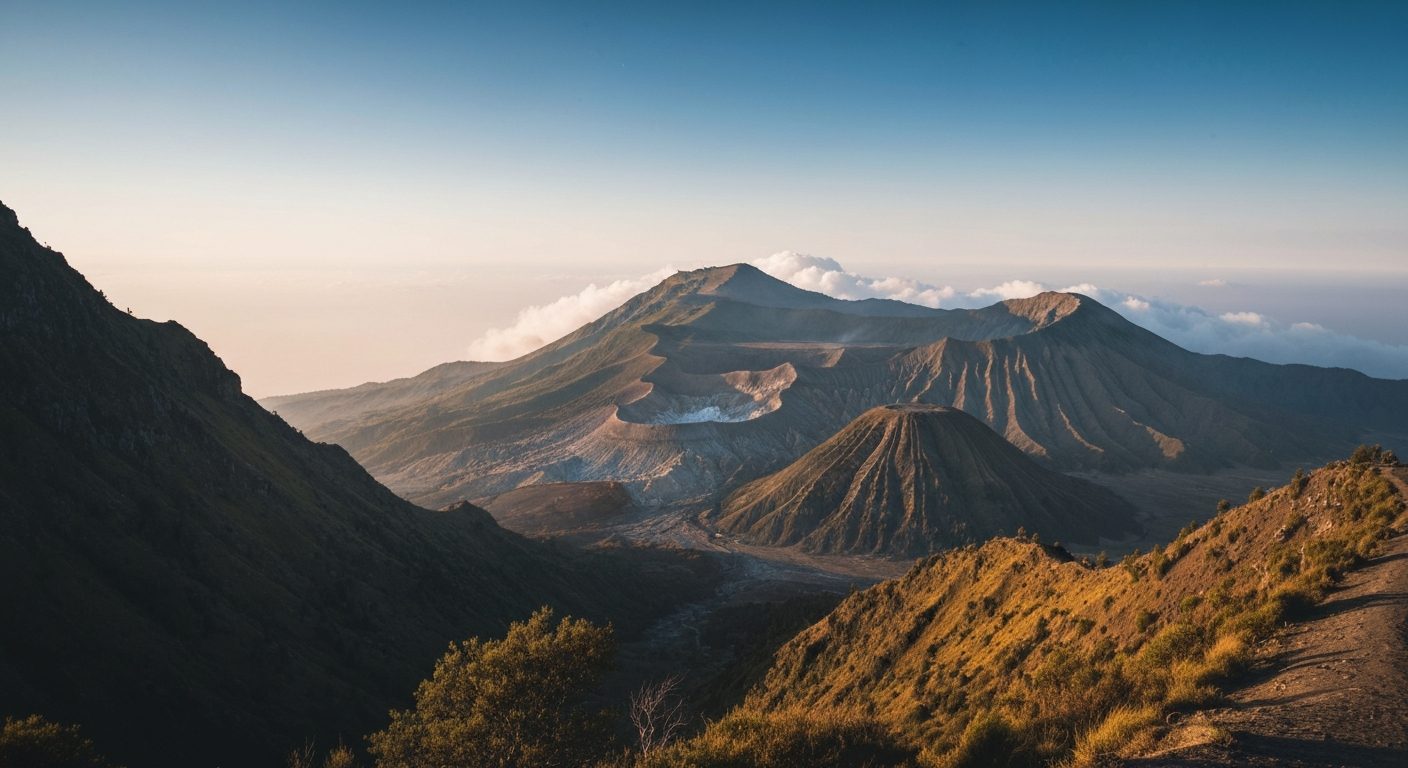
Mount Bromo is part of the vast Tengger Caldera, a lunar-like landscape of volcanic peaks and a sprawling “sea of sand.” The experience here centers on an expansive, panoramic sunrise view, typically from a viewpoint like Penanjakan or King Kong Hill, overlooking the entire caldera with Bromo, Batok, and Semeru volcanoes in the distance.
Your morning starts very early. You’ll typically be picked up from your accommodation in a 4×4 jeep, often around 3:00 AM. This jeep ride is part of the adventure, rumbling through the dark, across the sand sea, and up winding roads to the sunrise viewpoint.
Once at the viewpoint, you’ll join a crowd of fellow travelers waiting for the sun to emerge. As dawn breaks, the sky paints itself with colors, slowly illuminating the incredible panorama. The sight of the mist-shrouded caldera, with Bromo’s peak smoking gently, is truly captivating.
After sunrise, the jeep takes you down into the Sea of Sand. From there, it’s a relatively easy walk (about 1.5 – 2 km, or you can hire a local horse for a fee) across the sandy plains to the base of Bromo’s active crater. A concrete staircase with around 250 steps leads you up to the rim. From the top, you can peer directly into the steaming crater, hearing its rumble and smelling the sulfur. The views across the sand sea and other peaks from the rim are also impressive.
The Bromo experience is about scale, panoramic views, and a sense of otherworldliness. It feels like stepping onto another planet.
Ijen Crater: The Electric Blue Fire & Acidic Lake
Ijen Crater offers a more rugged, intimate, and physically demanding experience focused on a unique natural phenomenon: electric blue flames. This isn’t lava; it’s ignited sulfuric gas that burns as it escapes from cracks in the volcano. It’s best seen in complete darkness, which means an even earlier start than Bromo.
Most Ijen trips begin with a pick-up around midnight or 1:00 AM. You’ll drive to the Paltuding ranger post, the starting point for the hike. From there, it’s a steep, uphill trek in the dark, typically taking 1.5 to 2 hours to reach the crater rim. The trail is well-trodden but can be slippery and uneven, especially in the dark.
Upon reaching the rim, you’ll descend into the crater (this part is optional and often guided, especially for safety) to witness the blue flames. The descent is steep, rocky, and can be challenging, requiring good balance and caution. This is where a gas mask is essential due to the strong sulfur fumes. You’ll see local sulfur miners at work, collecting solidified sulfur in baskets, a poignant and humbling sight.
After spending time with the blue fire, you’ll ascend back to the crater rim to watch the sunrise. As daylight emerges, it reveals the world’s largest acidic crater lake, a surreal turquoise body of water, often shrouded in mist. The contrast between the pre-dawn blue fire and the sunrise lake view is striking.
The Ijen experience is about a unique natural spectacle, a challenging hike, and a raw encounter with geological forces and human endeavor.
Logistics & Wake-Up Calls: Night vs. Night
Both volcanoes demand very early starts, but their specific timings and how they fit into a multi-day itinerary differ. Understanding these bromo or ijen first from bali logistics is key to planning your trip.
Bromo Logistics
- Wake-up: Typically around 2:30 AM – 3:00 AM from a nearby guesthouse (e.g., in Cemoro Lawang or Sukapura). If staying further out, it could be earlier.
- Duration: The entire Bromo experience (jeep ride, sunrise, crater visit) usually takes about 5-6 hours. You’re typically back at your accommodation for breakfast by 8:00 AM – 9:00 AM.
- Access: Most commonly accessed from Malang or Probolinggo. For travelers coming from Bali, you’d cross the Ketapang ferry to Banyuwangi, then drive west (a significant overland journey, typically 6-8 hours, depending on traffic and starting point) to the Bromo region.
Ijen Logistics
- Wake-up: The earliest of the two, often between midnight and 1:00 AM, from accommodation in Banyuwangi.
- Duration: The hike, blue fire viewing, and sunrise lake view typically take 6-7 hours. You’re usually back at your accommodation for a late breakfast by 7:00 AM – 8:00 AM.
- Access: Ijen is very conveniently located near Banyuwangi, just a 1-1.5 hour drive from the Ketapang ferry terminal. This makes it an ideal first (or last) stop for Bali-Java trips.
Difficulty & Fitness: Bromo vs Ijen Difficulty Comparison
This is a significant differentiator. Your physical condition and tolerance for strenuous activity will heavily influence which volcano should i visit bromo or ijen from bali.
Bromo Difficulty
- Overall: Generally considered easy to moderate.
- Jeep Ride: No physical exertion.
- Sunrise Viewpoint: A short walk from where the jeep drops you off, often involving some stairs or uneven terrain. Generally accessible for most fitness levels.
- Crater Walk: A flat walk across the sand sea (1.5-2 km each way) followed by about 250 concrete steps to the crater rim. The steps can be tiring, especially at altitude, but are manageable for most people with average fitness.
- Altitude: The crater rim is around 2,329 meters (7,641 ft). The sunrise viewpoints are higher, around 2,770 meters (9,088 ft). Some people might feel mild effects of altitude.
- Gases: Mild sulfur smell at the crater rim, but generally not strong enough to require a gas mask for short visits.
Ijen Difficulty
- Overall: Moderate to challenging.
- Uphill Hike: A steep, continuous uphill trek for 1.5-2 hours in the dark. The trail can be rocky and slippery, especially after rain. Good hiking shoes are essential.
- Crater Descent: The path down to the blue fire is very steep, rocky, and uneven. It requires careful footing, often in low light. This part is not suitable for those with mobility issues or a fear of heights.
- Gases: Strong sulfur fumes are present, especially in the crater. A gas mask is mandatory for the blue fire descent and highly recommended for the crater rim, provided by tour operators. People with respiratory issues should consult a doctor before visiting.
- Altitude: The crater rim is around 2,386 meters (7,828 ft). The physical exertion at this altitude adds to the challenge.
Verdict: If you prefer a less strenuous experience with grand views, Bromo is your choice. If you’re fit, adventurous, and up for a significant hike for a unique sight, Ijen could be a powerful experience.
Photography Payoff & Crowds
Both volcanoes offer incredible photo opportunities, but the type of shots you’ll get and the crowd dynamics are different.
Bromo Photography & Crowds
- Photography: Wide-angle landscape shots are king here. The sunrise over the caldera, the vastness of the sand sea, and the smoking crater from the rim all make for dramatic images. Long exposures at dawn are popular.
- Crowds: Bromo is extremely popular. Sunrise viewpoints can get very crowded, especially during peak season and weekends. Expect to share the view with many others. The path to the crater can also be busy.
- Best for: Epic panoramic landscapes, “otherworldly” scenes, sunrise time-lapses.
Ijen Photography & Crowds
- Photography: The blue fire requires specific camera settings (high ISO, wide aperture, long exposure, tripod) and skill to capture well in the dark. The turquoise lake at sunrise offers vibrant color. Sulfur miners make for powerful documentary-style shots (always ask permission).
- Crowds: While Ijen also attracts crowds, especially at the blue fire viewing points, the spread of people along the hiking trail and within the crater can feel slightly less overwhelming than Bromo’s sunrise viewpoints. The descent into the crater is often managed by guides to ensure safety and flow.
- Best for: Unique night photography, surreal colors, documentary and portraiture.
Family-Friendliness & Accessibility
Considering who you’re traveling with is important. ijen crater vs bromo crater bali has different implications for families or those with limited mobility.
Bromo Family-Friendliness
- Children: Generally suitable for children aged 6-7 and up, provided they are reasonably active and can handle the early start and the steps to the crater. The jeep ride is exciting for kids.
- Elderly/Limited Mobility: The jeep can get you close to the sunrise viewpoint and the base of the crater. For those who cannot manage the steps, views from the base or the lower part of the staircase are still good. The option to hire a horse for the sand sea walk helps.
- Accessibility: Not wheelchair accessible due to uneven terrain and steps.
Ijen Family-Friendliness
- Children: Only recommended for older, very fit teenagers (12-14+) who are used to hiking and understand the safety precautions (gas masks, steep terrain, early start). The pre-dawn hike, strong sulfur fumes, and challenging descent make it unsuitable for younger children.
- Elderly/Limited Mobility: Not recommended. The steep, dark, and challenging hike, combined with the sulfur fumes, makes it unsuitable for those with mobility issues, heart conditions, or respiratory problems.
- Accessibility: Not accessible for anyone with physical limitations.
Integrating into Your Bali-Java Trip
How you slot either volcano into your itinerary from Bali is a key practical consideration. Our bromo and ijen tour from bali itineraries are designed for seamless transitions via the Ketapang ferry.
Visiting Bromo from Bali
- Route: From Bali, you’d typically take the ferry from Gilimanuk to Ketapang (Banyuwangi). From Ketapang, it’s a 6-8 hour drive west to the Bromo region (e.g., Cemoro Lawang). This usually requires an overnight stay near Bromo before the morning excursion.
- Minimum Days: A dedicated Bromo trip from Bali usually requires a minimum of 3 days/2 nights (Day 1: Travel Bali to Bromo region; Day 2: Bromo tour, travel back towards Ketapang or to another Java city; Day 3: Travel back to Bali).
Visiting Ijen from Bali
- Route: Ijen is geographically closer to Bali. After taking the ferry from Gilimanuk to Ketapang, it’s a relatively short 1-1.5 hour drive to your accommodation in Banyuwangi, making it a very convenient first stop in Java.
- Minimum Days: A dedicated Ijen trip from Bali can be done in 2 days/1 night (Day 1: Travel Bali to Banyuwangi; Day 2: Ijen blue fire tour, then travel back to Bali).
Consideration: Because Ijen is so close to the ferry, many travelers choose to visit Ijen first, then continue their journey further west into Java (e.g., to Bromo or Yogyakarta). This makes bromo or ijen first from bali an easy choice for Ijen as the first stop.
The Verdict: Which Volcano Bromo or Ijen Better?
There’s no single “better” volcano; it truly depends on your priorities and travel style. Here’s a clear breakdown to help you decide which volcano bromo or ijen better for you.
Pick Mount Bromo If:
- You prioritize grand, panoramic views and a classic sunrise experience. The sheer scale of the caldera is unmatched.
- You prefer a less physically demanding experience. The jeep handles most of the ascent, and the walk to the crater is manageable.
- You’re traveling with younger children or have mild mobility concerns.
- You want iconic, easily recognizable landscape photos.
- You’re making Bromo the sole volcano stop on a shorter Java trip.
Pick Ijen Crater If:
- You’re seeking a unique, otherworldly phenomenon like the blue fire. It’s a truly rare sight.
- You’re fit, adventurous, and enjoy a challenging hike. The physical effort makes the reward feel earned.
- You’re comfortable with early starts and strong sulfur fumes (with a mask).
- You want to witness local sulfur mining firsthand and experience a raw, unvarnished natural environment.
- You’re looking for a convenient first (or last) stop after the Ketapang ferry.
Ultimately, if you’re asking should i visit bromo or ijen from bali, consider what kind of “wow” moment you’re after. Bromo is a grand spectacle. Ijen is an intense, intimate encounter.
- Experience Focus
- Bromo: Panoramic sunrise over a vast caldera, exploring a “sea of sand,” walking to an active crater rim.
- Ijen: Rare electric blue flames, challenging pre-dawn hike, world’s largest acidic crater lake, witnessing sulfur miners.
- Physical Demands
- Bromo: Easy to Moderate (jeep + walk + ~250 steps). Suitable for most fitness levels, including older children.
- Ijen: Moderate to Challenging (steep 1.5-2hr uphill hike, challenging crater descent). Requires good fitness, not for young children or those with mobility/respiratory issues.
- Wake-up Time
- Bromo: ~2:30 AM – 3:00 AM (from local accommodation).
- Ijen: ~Midnight – 1:00 AM (from Banyuwangi accommodation).
- Gas Mask Needed?
- Bromo: No (mild sulfur smell at crater rim, generally safe).
- Ijen: Yes (mandatory for crater descent, provided by operators, due to strong sulfur fumes).
- Proximity to Bali Ferry (Ketapang)
- Bromo: ~6-8 hours drive inland from Ketapang.
- Ijen: ~1-1.5 hours drive from Ketapang.
- Typical Duration from Bali (Minimum)
- Bromo: 3 Days / 2 Nights for Bromo-only.
- Ijen: 2 Days / 1 Night for Ijen-only.
Why Not Both? The Bali-Java Volcano Circuit
For many travelers coming from Bali, the ultimate answer to bromo vs ijen which to visit is “both!” Combining Bromo and Ijen into a single, multi-day itinerary is a popular and highly rewarding choice. This allows you to experience both the grand scale of Bromo and the unique intensity of Ijen.
A typical bromo and ijen tour from bali circuit usually spans 2 to 4 days, depending on your pace and whether you add other stops like Tumpak Sewu waterfall or the ancient temples of Borobudur and Prambanan in Central Java.
A Common Bali-Bromo-Ijen-Bali Route (3 Days / 2 Nights)
- Day 1: Bali to East Java (Ijen Region)
- Morning: Pick-up from your Bali accommodation. Drive to Gilimanuk ferry port.
- Noon: Ferry crossing to Ketapang (Banyuwangi).
- Afternoon: Transfer to your accommodation in Banyuwangi. Relax and prepare for the early start.
- Day 2: Ijen Blue Fire & Drive to Bromo Region
- Midnight: Begin Ijen blue fire hike.
- Morning: Witness blue flames, sunrise over crater lake. Return to accommodation for breakfast and check-out.
- Late Morning/Afternoon: Drive from Banyuwangi to the Bromo region (e.g., Cemoro Lawang), a scenic journey taking 6-8 hours.
- Evening: Check into your Bromo accommodation, rest.
- Day 3: Bromo Sunrise & Return to Bali
- Early Morning: Bromo sunrise tour (jeep ride, viewpoint, crater climb).
- Late Morning: Return to accommodation for breakfast and check-out.
- Noon: Begin the long journey back towards Ketapang ferry port, then across to Bali. Drop-off at your Bali accommodation.
This specific itinerary is intense, involving two very early mornings and significant travel time. It’s designed to maximize your time and experiences. We offer more relaxed versions as well, with additional overnight stays for comfort.
Indicative Pricing for a Private 3-4 Day Bali-Java Volcano Circuit:
A private, expert-guided multi-destination tour covering Bromo and Ijen (and often including transfer back to Bali) typically ranges from US$450 – US$850 per person for a 3-day/2-night trip, based on two travelers sharing, last verified June 2026. This range includes private vehicle transfers, ferry tickets, local guides for each volcano, entrance fees, and standard accommodation. Luxury or extended itineraries with more comfortable stays or additional destinations will naturally be higher.
At Java From Bali, we arrange licensed local guides, park permits, and all transfers, ensuring a smooth, private, and safe journey. We work with trusted local partners who are experts in their regions, and we disclose this openly. You book directly with our Bali Premium Trip reservations team at transparent rates, without third-party markups. We pride ourselves on clear, honest pricing.
Ready to explore Java’s volcanic wonders? We map every route – Ketapang ferry, overland, flight – and arrange private, expert-guided multi-destination tours.
Plan your trip with our team today, or send us a WhatsApp message to discuss your ideal Bali-Java itinerary.
Frequently Asked Questions
Is it safe to visit Bromo and Ijen?
Yes, generally. Both volcanoes are closely monitored by geological agencies. Tour operators and local guides are experienced in navigating the terrain and conditions. At Ijen, gas masks are provided and mandatory for the crater descent due to sulfur fumes; always follow your guide’s instructions. Weather conditions can sometimes affect access, and operators will make safety calls. We arrange licensed local guides who prioritize your safety.
What should I pack for a Bromo and Ijen trip?
For both, warm layers are essential due to cold pre-dawn temperatures (down to 0-5°C / 32-41°F). Bring a hat, gloves, and a windproof jacket. Sturdy hiking shoes with good grip are crucial, especially for Ijen. A small backpack, headlamp (for Ijen), sunglasses, sunscreen, and a camera are also recommended. For Ijen, gas masks are provided by tour operators.
Can I do Bromo and Ijen without a tour?
While it’s technically possible to arrange transport and guides independently, it’s complex and time-consuming, especially for first-time visitors to Java. Logistics involve coordinating multiple private drivers, local jeeps, local guides (mandatory for Ijen’s crater descent), and permits. Our private tours simplify this entirely, providing seamless transfers, expert local guidance, and all necessary arrangements, ensuring a stress-free experience from Bali and back.
How long does the ferry from Bali to Java take?
The ferry from Gilimanuk (Bali) to Ketapang (East Java) typically takes about 45 minutes to 1.5 hours, depending on sea conditions and vessel type. However, factoring in waiting times at the port, the entire process can take 2-3 hours. It’s a busy route, so patience is key.
What is the best time of year to visit Bromo and Ijen?
The dry season, from April to October, is generally considered the best time to visit Bromo and Ijen. During these months, the weather is more stable, with clearer skies for sunrise views and less chance of rain making trails slippery. The peak season is July and August. The rainy season (November to March) can still be visited, but expect more unpredictable weather, occasional closures, and potentially muddier trails.
We understand that planning a multi-destination trip can be complex. That’s why we offer transparent, private, and expert-guided tours directly through our Bali Premium Trip reservations team. We’re here to make your journey from Bali to Java’s iconic volcanoes seamless and memorable.
Connect with us today to plan your trip. Let’s craft your perfect Java adventure.