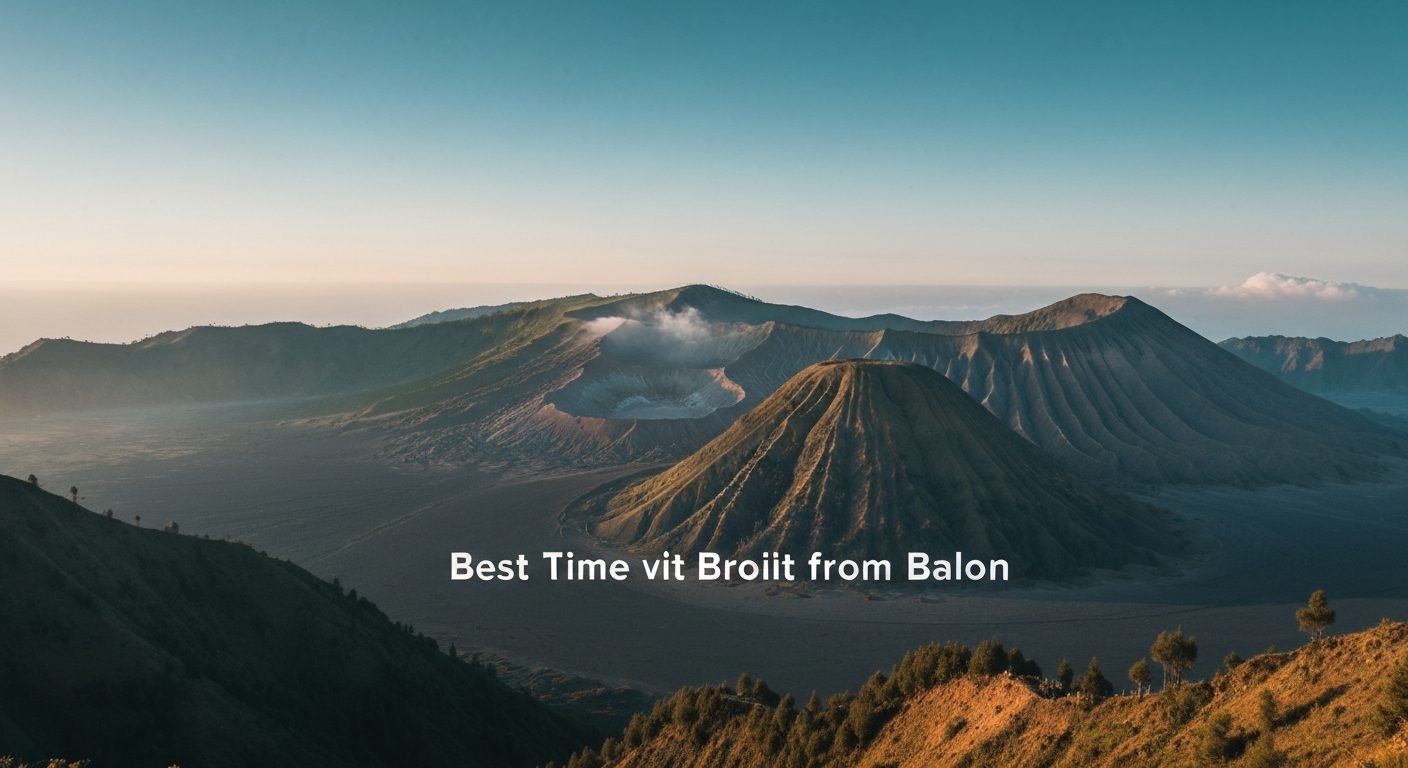
The best time to visit Bromo from Bali and combine it with Ijen, Borobudur, and other Java icons is generally during the dry season, which runs from May to October. For the clearest skies and optimal visibility for experiences like the Bromo sunrise and Ijen blue fire, the peak months of June, July, and August offer the most reliable conditions.
Planning a trip that spans Bali’s beaches and Java’s volcanoes and temples requires understanding the seasonal nuances. While Bali enjoys a relatively consistent tropical climate, Java, particularly the East and Central regions, experiences a more distinct dry and wet season cycle that significantly impacts travel logistics and sightseeing quality. As Daniel Reyes, Itinerary & Value Editor at Java From Bali, I’ve seen countless itineraries unfold, and I can tell you that timing is the single most decisive factor for a truly rewarding Java experience.
Why Season Matters: Visibility is Everything for Java’s Icons
When you’re trekking to a volcanic crater rim at 2,329 meters (Bromo) or descending into a sulfur mine before dawn (Ijen), visibility isn’t just a preference; it’s a necessity. Cloud cover can completely obscure the iconic Bromo sunrise panorama. Rain makes the Ijen crater descent slippery and hazardous, potentially washing out the blue fire spectacle. Even ancient temples like Borobudur and Prambanan lose some of their magic when constantly shrouded in grey skies or doused by downpours.
Our advice is always grounded in logistics and real-world conditions. We want you to see what you came for, not just imagine it.
The Dry Season: May to October for Optimal Bali-Java Tours
The dry season in East and Central Java is widely considered the best time to visit Bromo Ijen season and other attractions. This period offers cooler temperatures, lower humidity, and, most importantly, significantly less rainfall and clearer skies.
May: The Gentle Transition
May marks the tail end of the shoulder season, transitioning from the wet to the dry period.
- Weather: Expect increasingly sunny days with occasional, short-lived afternoon showers, especially early in the month. The air starts to feel crisper, and humidity drops.
- Visibility: Good to excellent for Bromo sunrise and Ijen blue fire. Cloud cover is less frequent than in the preceding months.
- Crowds & Costs: Moderate. You’ll find fewer international tourists compared to peak season, leading to slightly lower demand for accommodations and guides. This can translate to better value for your best time Bali Java tour.
- Logistics: Overland travel is smooth. Ferry crossings from Bali to Ketapang (Java) are typically calm. Trails are firm.
May is a fantastic choice for those seeking good weather without the peak season crowds. It offers a sweet spot of pleasant conditions and reasonable visitor numbers.
June, July, August: Peak Dry Season & Bromo June July August Visibility
These three months are the absolute peak for combining Bali with East and Central Java.
- Weather: Consistently dry, sunny, and clear. Daytime temperatures are comfortable, and nights, especially around Bromo, can be quite cool, dropping to 5-10°C (41-50°F).
- Visibility: Excellent. This is when bromo sunrise best month claims are most accurate. Expect truly spectacular views of the caldera and minimal cloud cover for Ijen’s blue fire. The vibrant green landscapes surrounding Tumpak Sewu waterfall are also at their most accessible and photogenic.
- Crowds & Costs: High. This is prime holiday season for many international travelers, so expect more people at popular sites. Accommodation and guide services are in high demand. We recommend booking your java east dry season best months trip well in advance, ideally 3-6 months out, to secure your preferred dates and lodging.
- Logistics: All routes (Ketapang ferry, overland, flights to Surabaya/Yogyakarta) operate smoothly. Trails are dry and safe.
If your priority is guaranteed clear skies and the most dramatic views, June, July, and August are your go-to months. Be prepared for company, however; you won’t be alone on the Bromo crater rim.
September & October: The Shoulder Season’s Last Hurrah
As the dry season winds down, September and October offer another excellent window for a Bali-Java adventure.
- Weather: Still predominantly dry and sunny, though you might start to see an increase in humidity and occasional, short afternoon showers towards late October as the transition to the wet season begins.
- Visibility: Very good. While not as consistently crystal-clear as the peak months, conditions remain highly favorable for volcanic sunrises and blue fire.
- Crowds & Costs: Moderate to low. The peak season crowds thin out considerably after August, making for a more relaxed experience. Prices for accommodation and services tend to be more competitive.
- Logistics: Travel remains easy. Trails are still in good condition.
September and early October are ideal for travelers who prefer fewer crowds but still want to enjoy excellent weather conditions for their Java explorations.
The Wet Season Realities: November to March Java Tour
The wet season, or monsoon season, from November to March, brings a different set of challenges and trade-offs for visiting Java’s iconic sites. While travel is still possible, expectations need to be adjusted.
November & December: Beginning of Monsoon & East Java Weather
These months mark the onset of the rainy season.
- Weather: Variable. Days can start sunny but often turn cloudy, with afternoon or evening downpours becoming more frequent. Humidity rises. East Java weather November December can be unpredictable, with bursts of heavy rain.
- Visibility: Moderate to poor. Cloud cover can frequently obscure Bromo’s sunrise and Ijen’s crater views. While blue fire might still be visible, the overall experience can be less grand if rain is persistent.
- Crowds & Costs: Low. Fewer tourists venture to Java during these months, leading to lower demand and potentially more competitive pricing.
- Logistics: Roads can be slippery. Ferry crossings might be rougher in strong winds. Overland routes are generally fine but expect slower travel due to rain.
Traveling in November or December can offer a more intimate experience with fewer people, but you need to be flexible and prepared for weather-related disruptions.
January, February, March: Peak Monsoon & Rainy Season November March Java Tour
This period is the heart of the wet season, bringing the heaviest rainfall.
- Weather: Expect frequent, heavy rainfall, often lasting for several hours. Skies are often overcast. Temperatures remain warm, but humidity is high.
- Visibility: Poor. Persistent cloud cover makes Bromo sunrise views highly unlikely. Ijen’s trails become very slippery, and the blue fire can be obscured or even deemed unsafe to access in extreme conditions. Tumpak Sewu’s paths are treacherous.
- Crowds & Costs: Very low. This is the quietest time for tourism in East and Central Java. Prices are at their lowest.
- Logistics: Significant challenges.
- Bromo: Access roads can be muddy, and jeep tours might be delayed or cancelled due to heavy fog or rain. The climb to the crater rim is slippery.
- Ijen: The descent into the crater for blue fire is often deemed too dangerous by local guides due to slippery trails and increased risk of landslides. Tours may be cancelled. Park authorities may close Ijen Crater at short notice for safety reasons.
- Tumpak Sewu: The trek down to the waterfall is already challenging in dry conditions; in the wet season, it becomes extremely hazardous, with slippery rocks and swollen rivers. We generally advise against visiting Tumpak Sewu during peak monsoon.
- Overland Travel: Roads can be prone to flooding or landslides, especially in mountainous areas, leading to significant delays or detours. Ferry crossings can be rough.
- Flights: While less affected than overland, heavy storms can cause flight delays to Surabaya or Yogyakarta.
While visiting during the peak monsoon can offer unique experiences for very adventurous travelers who prioritize solitude over guaranteed views, we generally advise against planning key volcanic excursions like Bromo sunrise and Ijen blue fire during January-March for a rainy season November March Java tour. The risk of disappointment or cancellation is simply too high.
When to Visit Bali and Java: A Season Comparison
To help you decide when to visit Bali and Java, here’s a quick overview of what each season means for your trip:
- Dry Season (May – October)
-
- Weather: Mostly clear skies, sunny days, low humidity. Cooler nights at higher altitudes.
- Visibility: Excellent for Bromo sunrise and Ijen blue fire. Best chances for panoramic views.
- Logistics: Smooth overland travel, safe trekking conditions, reliable ferry crossings.
- Crowds/Cost: Moderate in May/Sept/Oct, High in June/July/August. Book ahead for peak.
- Best For: First-time visitors, photographers, those prioritizing guaranteed views and comfortable conditions.
- Wet Season (November – April)
-
- Weather: Frequent, heavy rainfall, high humidity, often overcast skies.
- Visibility: Poor to moderate. High chance of obscured views, especially for sunrises.
- Logistics: Slippery trails, potential road closures/delays, rougher ferry crossings. Ijen closures possible.
- Crowds/Cost: Low. More competitive pricing.
- Best For: Budget travelers, those seeking solitude, flexible travelers prepared for weather disruptions, not recommended for first-timers to Bromo/Ijen.
Trade-offs: Crowds vs. Cost, and Planning Ahead
As with any popular destination, the best time visit bromo ijen season for weather often correlates with higher demand and larger crowds.
- Peak Season (June-August): Expect Bromo’s view points and Ijen’s crater rim to be quite busy. Accommodation in Cemoro Lawang (Bromo) and Banyuwangi (Ijen) fills up quickly, and prices are at their highest. Guide availability can also be stretched. Booking 3-6 months in advance is crucial. An indicative price range for a private 3-day/2-night Bromo-Ijen overland trip from Bali (including transfers, guide, accommodation, permits) might be US$450-900 per person, last verified June 2026, varying significantly by accommodation tier and group size.
- Shoulder Seasons (May, September, October): These months offer a fantastic balance. The weather is still excellent, but crowds are noticeably thinner. You might find better deals on accommodations and more flexibility with tour bookings. This is often my personal recommendation for a good mix of experience and value.
- Low Season (November-April): You’ll encounter the fewest tourists and the most competitive prices. However, this comes with the significant risk of poor visibility and potential tour cancellations due to adverse weather or safety concerns, particularly for Ijen blue fire. For example, a 2-day Bromo-Ijen trip might be available for US$400-750 per person during this time, but the experience quality is less certain.
Overland vs. Flight Logistics in Different Seasons
The method of travel also plays a role in your seasonal considerations.
- Ketapang Ferry & Overland (Bali to East Java): This is the most common route for Bromo and Ijen. During the dry season, it’s generally a smooth journey. The ferry crossing from Gilimanuk (Bali) to Ketapang (Java) takes about 45-60 minutes, and the subsequent drives are comfortable. In the wet season, strong winds can make the ferry crossing choppier, and heavy rain can slow down overland transfers due to reduced visibility or slippery roads.
- Flights (Bali to Surabaya/Yogyakarta): If you’re combining East Java (Bromo/Ijen) with Central Java (Borobudur/Prambanan), flying from Bali to Surabaya (SUB) or Yogyakarta (YIA/JOG) and then taking internal flights or trains can be efficient. Flights are generally less affected by monsoon, though severe thunderstorms can cause delays. This route is often preferred for longer 4-7 day itineraries that cover more ground, typically ranging from US$1,200-2,500 per person for a comprehensive 4-day Bali-Java-Bali trip including flights, Bromo, Ijen, and Borobudur, last verified June 2026.
We map every route to ensure the most efficient and comfortable journey, regardless of the season, always prioritizing safety and clear communication about potential delays.
A Note on Guides and Permits
At Java From Bali, we work closely with licensed local guides and arrange all necessary permits for Bromo, Ijen, Borobudur, and Tumpak Sewu. Our local partners are crucial for navigating seasonal changes. They have the most up-to-date information on trail conditions, potential closures, and the safety of activities like the Ijen blue fire trek. We disclose openly that we arrange these services rather than owning park concessions ourselves, ensuring you benefit from genuine local expertise.
Ready to align your Bali-Java adventure with the perfect season? Our team at Bali Premium Trip is here to help you plan your trip. We’ll honestly map out routes, provide transparent pricing, and arrange private, expert-guided multi-destination tours tailored to your preferences and the time of year you plan to travel.
Monthly Breakdown for Bali-Java Travel
Here’s a table summarizing the conditions you can expect for a Java tour departing from Bali, month by month:
| Month | Primary Season | Weather & Conditions | Visibility (Bromo/Ijen) | Crowds | Recommendations |
|---|---|---|---|---|---|
| January | Wet Season | Peak monsoon. Heavy, frequent rain. High humidity. Risk of flooding/landslides. | Poor (high chance of cancellation for Ijen) | Very Low | Generally not recommended for Bromo/Ijen. Consider Central Java (Borobudur) with covered transport. Be prepared for major disruptions. |
| February | Wet Season | Heavy rain continues, though sometimes less intense than Jan. High humidity. | Poor (high chance of cancellation for Ijen) | Very Low | Similar to January. Highest risk of disappointment for volcanic experiences. Focus on cultural sites with indoor options. |
| March | Wet Season | Rainfall starts to decrease towards the end of the month, but still significant. Humidity remains high. | Poor to Moderate | Low | Conditions improve slightly by late March, but still risky for Bromo sunrise and Ijen blue fire. Best for budget travelers willing to gamble on weather. |
| April | Shoulder | Transition period. Decreasing rain, increasing sunny days. Humidity drops. | Moderate to Good | Low | A decent option, but still some chance of rain. Good for avoiding crowds. Ijen conditions improving, but still check local reports. |
| May | Dry Season | Excellent transition. Mostly sunny, pleasant temperatures. Occasional light showers. | Good to Excellent | Moderate | Highly recommended. Good weather, fewer crowds than peak season. Excellent value. |
| June | Dry Season | Consistently dry, clear skies. Cooler nights around Bromo. | Excellent | Moderate-High | One of the best months. Superb visibility for Bromo sunrise and Ijen blue fire. Book ahead. |
| July | Dry Season | Peak dry season. Very clear skies, low humidity, comfortable temperatures. | Excellent | High | The best month for guaranteed views. Highest crowds and prices. Book well in advance. |
| August | Dry Season | Peak dry season continues. Consistently dry and clear. Ideal for outdoor activities. | Excellent | High | Another top choice for optimal visibility. Crowds remain high. Essential to book early. |
| September | Dry Season | Dry season winds down. Mostly sunny, comfortable. Chance of occasional rain towards month-end. | Very Good | Moderate | Excellent choice. Great weather and significantly fewer crowds than July/August. Good value. |
| October | Shoulder | Transition to wet season. Still largely dry, but humidity increases. More frequent afternoon showers. | Good | Low-Moderate | Good balance of weather and low crowds. Ideal for those who prefer a quieter experience before the monsoon sets in. |
| November | Wet Season | Start of monsoon. Increasing rainfall, often afternoon showers. Humidity rises. | Moderate to Poor | Low | Possible, but be prepared for rain and reduced visibility. Ijen blue fire conditions become riskier. |
| December | Wet Season | Heavy, frequent rainfall. Overcast days common. | Poor | Low | Not ideal for volcanic treks. Higher chance of disruptions and obscured views. Consider indoor attractions or prepare for very wet conditions. |
Keep in mind that weather patterns can vary year to year, and this guide provides general expectations.
Frequently Asked Questions about Visiting Java from Bali
Can I visit Bromo and Ijen during the rainy season?
While technically possible, visiting Bromo and Ijen during the rainy season (November to March) comes with significant risks and reduced chances of a good experience. Heavy rain can obscure views, make trails slippery and dangerous, and lead to tour cancellations, especially for the Ijen blue fire trek, which may be closed by authorities for safety. We generally advise against it if your primary goal is spectacular views and a comfortable trek.
What is the best month for Bromo sunrise visibility?
The best month for Bromo sunrise visibility is typically July, closely followed by June and August. During these peak dry season months, the skies are consistently clear, offering the highest chance of witnessing the iconic sunrise over the caldera without cloud obstruction. Nights are also cooler and crisper, enhancing the overall experience.
How many days do I need for a Bali-Java tour?
A typical multi-destination tour combining Bali with East Java’s Bromo and Ijen usually requires 2-3 days overland from Bali. If you want to include Central Java’s Borobudur and Prambanan temples, you’ll need at least 4-5 days, often involving internal flights between Bali, Surabaya, and Yogyakarta to maximize your time. We arrange itineraries from 2-day Bromo-Ijen trips to comprehensive 7-day Bali-Java-Bali adventures, tailored to your pace and interests.
Is it safe to travel to Java during the monsoon season?
Overall, yes, Java is generally safe to travel during the monsoon season. However, safety for specific activities like volcano treks (Bromo, Ijen) and waterfall visits (Tumpak Sewu) can be compromised by heavy rainfall. Trails become slippery, rivers swell, and visibility drops. Overland travel can also be slower due to wet roads or potential localized flooding. It’s crucial to follow local guide advice and be prepared for itinerary changes for your safety.
What is the best season for Ijen blue fire?
The Ijen blue fire best season aligns with the dry season, from May to October, with June, July, and August being the most reliable months. During this period, the trails are dry and less slippery, making the pre-dawn trek safer. Critically, the air is clearer, which significantly improves the visibility of the blue flames, making the entire experience much more rewarding. In the wet season, blue fire tours are frequently cancelled due to safety concerns.
—
No matter when to visit Bali and Java, Java From Bali, operated by Bali Premium Trip, founded in Kuta in 2015, is committed to providing you with transparent, honest planning. We arrange licensed local guides, permits, and transfers, disclosing openly that we partner with local experts. You book directly with our reservations team at transparent rates.
Ready to start planning your perfect Bali-Java adventure?
Plan your trip with us today via our contact page, or reach out directly on WhatsApp for personalized planning advice.