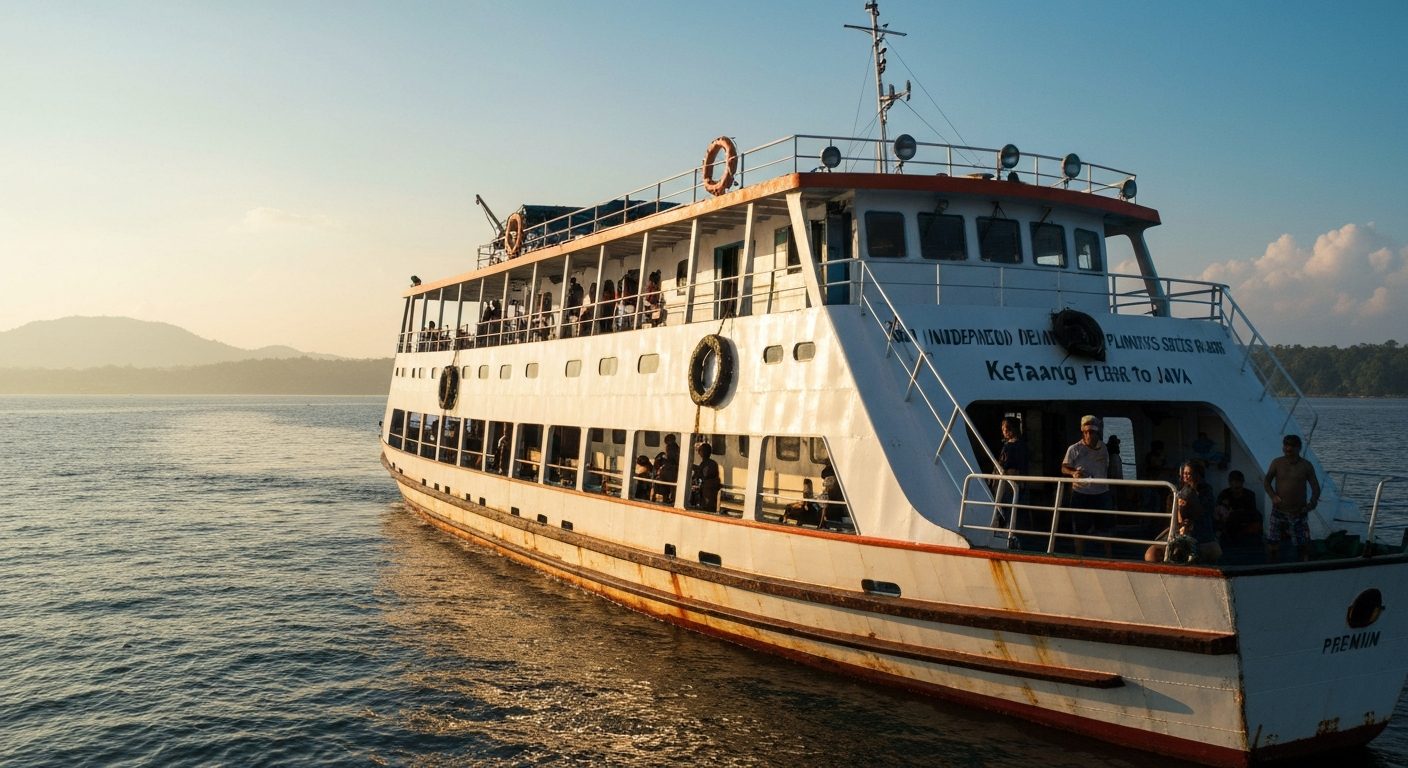
To cross from Bali to Java by road, you will use the Ketapang ferry Bali to Java route, connecting Gilimanuk Port on Bali’s western tip to Ketapang Port in Banyuwangi, East Java. This ferry crossing is the essential link for anyone planning an overland journey from the Island of the Gods to explore Java’s iconic volcanoes and ancient temples.
As Daniel Reyes, Itinerary & Value Editor at Java From Bali, I’ve seen countless travelers navigate this journey. Many are surprised by the details of the transfer chain. My goal here is to explain the on-the-ground logistics, helping you understand how the Ketapang ferry Gilimanuk Bali Java transfer works, what it involves, and how it fits into a broader Bali-Java overland itinerary. This guide aims to be genuinely useful, whether you book with us or plan your own adventure.
Understanding the Ketapang Ferry Bali to Java Crossing
The Ketapang ferry Bali Java transfer is a continuous, 24-hour operation, facilitating the movement of people and vehicles between Bali and Java. It’s not a luxury cruise; it’s a workhorse of transport, moving everything from pedestrians and motorcycles to cars, buses, and large trucks.
Gilimanuk (Bali) to Ketapang (Java): The Gateway
Gilimanuk Port, located on the far western coast of Bali, is your departure point. It’s a busy hub, particularly during peak travel seasons or public holidays. Expect a functional, somewhat chaotic atmosphere characteristic of major transport links in Indonesia.
On the Java side, Ketapang Port is in Banyuwangi, East Java. Banyuwangi itself is gaining recognition as a destination, largely due to its proximity to Ijen Crater. From Ketapang, you’re directly linked to Java’s road network, ready to continue your journey deeper into the island.
Gilimanuk to Ketapang Ferry Duration & Frequency
The actual gilimanuk to ketapang ferry duration for the crossing itself is relatively short, typically ranging from 45 minutes to 1.5 hours. This variability depends on factors such as sea conditions, tides, and the specific ferry vessel used. For instance, older vessels might be slower, or strong currents could extend the journey slightly.
What often takes more time than the crossing itself are the queues at both ports, especially during holidays or peak morning/evening hours. Factor in waiting times for boarding and disembarking, which can add anywhere from 30 minutes to several hours to your total transit time.
The ferry schedule frequency Bali Java crossing is high. Ferries depart roughly every 15-30 minutes, 24 hours a day, 7 days a week. This constant operation means you rarely have to wait long for the next departure once you are at the loading dock. However, this also contributes to the continuous flow of traffic, so queues can build up at any time.
Ketapang Ferry Tickets & Fares
Purchasing tickets for the Ketapang ferry is straightforward. You can buy them directly at the port counters on the day of travel. Increasingly, travelers are also using the official online booking platform, Ferizy, which can sometimes save time, especially for vehicle passengers. While online booking offers convenience, be aware that you’ll still need to scan your e-ticket at the port.
Fares are highly affordable, reflecting the ferry’s role as a public transport staple. Prices are set by the government and are subject to minor adjustments. Here are indicative ranges (last verified June 2026):
- Pedestrian Ticket
- IDR 10,000 – 15,000 (approx. US$0.60 – 1)
- Motorcycle Ticket
- IDR 25,000 – 30,000 (approx. US$1.60 – 2)
- Small Car Ticket (Group 4A)
- IDR 175,000 – 200,000 (approx. US$11 – 13)
These prices cover the vehicle and the driver; additional passengers in a car or on a motorcycle will need separate pedestrian tickets. Keep in mind that these are just general guidelines; always reconfirm current fares before your trip.
Ketapang Ferry Vehicles: Motorcycle and Car Transport Rules
The Ketapang ferry vehicles motorcycle transport rules are designed for efficiency and safety. All types of vehicles are allowed, from scooters to large buses and trucks.
- Motorcycles: Riders simply drive their motorcycles onto designated areas on the lower decks. Staff will often direct you where to park and may provide ropes or chocks to secure your bike, though it’s always wise to bring your own tie-downs if you’re concerned. Riders and passengers then typically head to the passenger decks.
- Cars: Private cars, including rental cars and those driven by private transfers, drive directly onto the ferry. You’ll be directed by port staff to a parking spot on the vehicle deck. Once parked, it’s customary for passengers to leave their vehicles and ascend to the main passenger areas, which are usually air-conditioned and offer seating.
- Buses and Trucks: These larger vehicles also load onto the ferry, often using specific ramps or sections of the deck.
It’s important to keep your vehicle locked and secure, taking any valuables with you when you leave the vehicle deck. While incidents are rare, exercising caution is always a good practice.
Rules and Regulations for Ferry Travel
When preparing for your bali to java ferry route crossing, a few simple rules apply:
- Identification: Always carry valid identification (passport for international visitors, KTP for Indonesians). While checks are not always rigorous for every pedestrian, they are routine for vehicle drivers and can be requested at any time.
- Safety First: Follow all instructions from port staff and ferry crew. Pay attention to safety announcements.
- No Smoking: Smoking is generally prohibited in enclosed passenger areas. Designated smoking areas are usually available on open decks.
- Food and Drink: Small kiosks are often available on board selling snacks and drinks, but bringing your own is fine.
- Stay Updated: Ferry schedules and conditions can change, especially during bad weather. Check local news or port information if you have concerns.
The Wider Bali Java Overland Tour Route Logistics
Understanding the bali java overland ferry route logistics means looking beyond just the ferry. It’s about the entire journey from your starting point in Bali to your destination in Java.
From Bali to Gilimanuk Port
Getting to Gilimanuk Port from popular tourist areas in Bali involves a significant drive. Here are approximate travel times by car, depending on traffic:
- From Denpasar/Kuta/Seminyak/Canggu: 3.5 to 4.5 hours
- From Ubud: 3 to 4 hours
- From Munduk/Lovina (North Bali): 1.5 to 2.5 hours
These times do not include stops for food, restrooms, or potential traffic delays, which can be considerable, especially around Denpasar. The route generally follows the main roads along Bali’s western coast.
From Ketapang Port (Banyuwangi) to Bromo & Ijen
Once you disembark at Ketapang Port in Banyuwangi, East Java, your onward journey to key destinations begins. This leg is crucial for anyone planning a bali to bromo ijen ferry crossing.
- Ketapang Port to Ijen Crater: Ijen is the closest major attraction from Ketapang. The drive to Paltuding (the Ijen trekking start point) takes about 1.5 to 2 hours. Many travelers arrive in the late evening, check into a hotel near Ijen or Banyuwangi city, rest for a few hours, and then start the trek to Ijen Crater around 1-2 AM to witness the famous blue fire phenomenon.
- Ketapang Port to Mount Bromo: Reaching Mount Bromo from Ketapang is a much longer drive, typically 5 to 7 hours, depending on traffic and road conditions. This usually means a full day of travel if done directly, or it’s often broken up with a night near Ijen. Travelers aiming for a Bromo sunrise usually stay overnight in Cemoro Lawang or a nearby village to be at the viewpoint before dawn.
Common Overland Routes: Bali to Ijen, Ijen to Bromo, Bromo to Yogyakarta
A typical bali java overland tour route often follows this progression:
- Bali to Ijen: Drive from your Bali accommodation to Gilimanuk, ferry to Ketapang, then drive to your Ijen area accommodation. This is usually an overnight stay before an early morning Ijen trek.
- Ijen to Bromo: After the Ijen trek and breakfast, drive from Ijen to the Mount Bromo area. This is a significant travel day, usually arriving in the late afternoon/evening for an overnight stay before a Bromo sunrise tour.
- Bromo to Yogyakarta (or onward): From Bromo, travelers typically head to Yogyakarta for Borobudur and Prambanan. This can be done by:
- Flight: Drive from Bromo to Surabaya’s Juanda International Airport (SUB) (3-4 hours), then fly to Yogyakarta (YIA or JOG) (1 hour flight).
- Train: Drive from Bromo to Surabaya or Malang train stations, then take a scenic train to Yogyakarta (approx. 4-6 hours).
- Overland Drive: A very long drive, roughly 10-12 hours from Bromo to Yogyakarta, often not recommended for comfort or efficiency unless making multiple stops.
An alternative, less common route might include Tumpak Sewu waterfall. Tumpak Sewu is usually accessed from the Lumajang area, requiring a detour and additional overnight stay between Ijen and Bromo, or as a standalone trip from Surabaya/Malang. It adds significant travel time but offers spectacular views.
Planning Your Bali to Java Overland Transfer
Effective planning makes all the difference for a smooth overland journey.
Self-Driving vs. Arranging a Private Transfer
Deciding whether to self-drive or opt for a private transfer is a key choice. Both have their merits.
- Self-Driving (Rental Car or Motorcycle)
-
Pros: Maximum flexibility, often lower upfront cost for vehicle rental, sense of adventure.
Cons: Requires navigation skills, dealing with Indonesian traffic, potential language barriers at ports/checkpoints, responsibility for vehicle maintenance/damage, finding parking, navigating complex routes to attractions like Bromo/Ijen (where local jeeps are often mandatory anyway), and managing ferry logistics yourself. Can be exhausting.
- Arranging a Private Transfer (with Bali Premium Trip)
-
Pros: Stress-free, door-to-door service, experienced local drivers who know the routes and ferry logistics, comfort, safety, no need to worry about vehicle permits or parking, often includes licensed local guides for attractions. Allows you to relax and enjoy the scenery. We handle all ferry ticket purchases and coordination.
Cons: Higher cost than self-driving, less spontaneity (though itineraries are customisable), you’re on a set schedule.
For most international travelers, especially those unfamiliar with Indonesian roads and local customs, arranging a private transfer provides a far more relaxing and efficient experience. While the individual ferry fares are cheap, the value of a seamless, expert-guided journey that handles all the complexities is considerable. Our 3-day Bali-Ijen-Bromo-Surabaya private tour, for example, might range from US$600-900 per person (based on 2 travelers, last verified June 2026), covering transfers, accommodation, guides, and park fees – a premium for peace of mind.
Ready to explore Java without the stress? Let us handle the logistics. Our private, expert-guided multi-destination tours are designed for comfort and insight. You can plan your trip with us today.
What to Pack for an Overland Journey
Overland travel requires a slightly different packing strategy than a resort stay.
- Layers of Clothing: Temperatures vary dramatically, from hot and humid coastal areas to chilly mountain mornings at Bromo and Ijen. Pack lightweight clothing for daytime, and warm jackets, hats, and gloves for early morning volcano treks.
- Comfortable Footwear: Essential for walking around ports and especially for trekking at Ijen and Bromo.
- Small Day Bag: Keep essentials like water, snacks, sunscreen, insect repellent, and any medications readily accessible during transfers.
- Power Bank: Keep your devices charged, especially if you’re relying on maps or entertainment during long drives.
- Copy of Documents: Keep digital and physical copies of your passport, visas, and any booking confirmations.
- Cash: While cards are accepted in many places, having small denominations of Indonesian Rupiah is useful for local vendors, small purchases, and tips.
Timing Your Crossing: When to Travel
While the ferry operates 24/7, strategic timing can improve your experience.
- Avoid Peak Holidays: Indonesian public holidays (like Eid al-Fitr, Christmas, New Year) see massive internal migration, leading to extremely long queues at Gilimanuk and Ketapang. If you must travel then, book everything well in advance and prepare for delays.
- Day vs. Night: Daytime crossings offer views of the coastline. Night crossings are generally quieter, though visibility is limited. For those heading to Ijen for the blue fire, arriving in Ketapang in the late afternoon/early evening is ideal to allow for dinner and a few hours of rest before the midnight trek.
- Early Morning: Starting your drive from Bali very early (e.g., 5-6 AM) can help you reach Gilimanuk before the heaviest traffic builds up, potentially reducing ferry wait times.
Why a Private Bali Premium Trip Tour Makes Sense
At Java From Bali, we understand the complexities of multi-destination travel in Indonesia. Our service, operated by Bali Premium Trip (a luxury travel concierge founded in Kuta in 2015), is built on the principle of providing transparent, high-value experiences.
We don’t own the park concessions or the jeeps; instead, we ARRANGE licensed local guides, permits, and transfers through a network of vetted local partners. This means you benefit from genuine local expertise and support, while we handle all the coordination. You book directly with our Bali Premium Trip reservations team at transparent, published rates, ensuring there are no hidden markups or third-party referral fees.
Our tours are designed to remove the logistical burdens, allowing you to focus on the experience. From navigating the ketapang ferry bali java transfer to arranging comfortable transport from ketapang port banyuwangi to bromo ijen, we ensure a smooth, well-paced journey. We provide expert-guided experiences that connect you to the heart of Java’s natural and cultural wonders.
Frequently Asked Questions
Is the Ketapang ferry safe?
Yes, the Ketapang ferry is generally considered safe. Ferries are large vessels designed for vehicle and passenger transport, and safety regulations are in place. While comfort levels vary between ferries, they are routinely inspected. Always follow crew instructions and exercise standard travel precautions.
Can I buy Ketapang ferry tickets online?
Yes, you can buy Ketapang ferry tickets online through the official Ferizy website or app. This can be a convenient option, especially for vehicle passengers, as it may help streamline the process at the port. However, you will still need to present your e-ticket at the port for scanning before boarding.
How long is the drive from Ketapang to Ijen and Bromo?
From Ketapang Port, the drive to the Ijen Crater trekking start point (Paltuding) is approximately 1.5 to 2 hours. The drive from Ketapang (or Ijen area) to Mount Bromo is significantly longer, typically taking 5 to 7 hours, depending on traffic and road conditions. These travel times underscore why most multi-day itineraries break the journey with overnight stays.
What documents do I need for the Ketapang ferry crossing?
For Indonesian citizens, a KTP (ID card) is sufficient. For international travelers, your passport is the primary identification document. While not always strictly checked for every pedestrian passenger, it’s essential to have it readily available, especially if you are driving a vehicle or using a private transfer service.
Is it possible to cross the Ketapang ferry at night?
Yes, the Ketapang ferry operates 24 hours a day, 7 days a week. You can cross at any time, day or night. Night crossings are common, particularly for travelers aiming to arrive in Banyuwangi for an early morning Ijen blue fire trek, which typically starts around 1-2 AM.
Understanding the ketapang ferry bali to java crossing is the first step in planning your Java adventure. It’s a logistical hub, connecting two distinct islands and paving the way for incredible experiences. Whether you choose to navigate it yourself or opt for the ease of a private tour, knowing these details helps ensure a smooth journey.
Ready to experience Java’s wonders without the hassle? Contact us today to plan your trip, or send us a WhatsApp message to discuss your ideal Bali + Java itinerary.