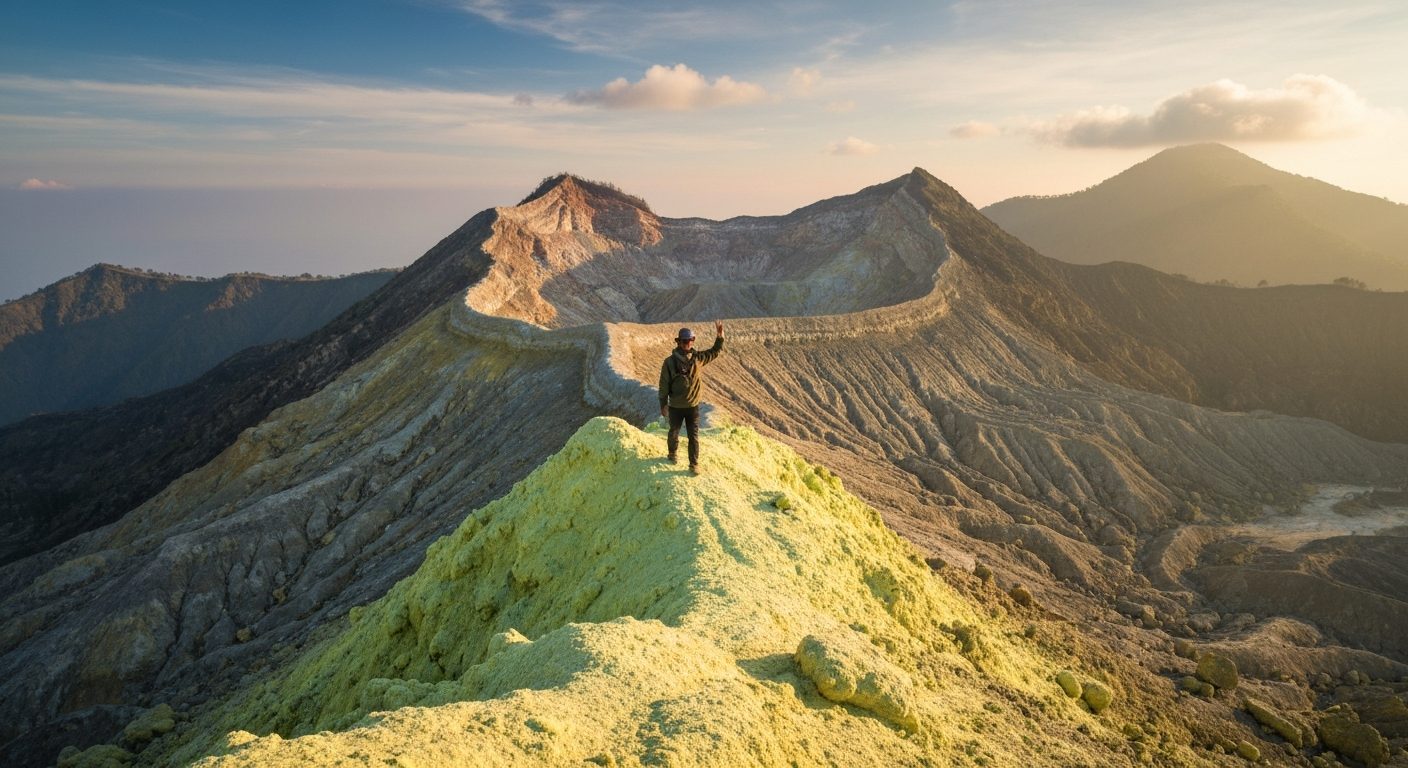
Planning an Ijen Crater sulfur mining tour from Bali means understanding a journey that is as visually striking as it is physically demanding, taking you to a live industrial volcano where dedicated miners extract sulfur. This guide breaks down the science of the blue fire, the realities of the sulfur mining operation, and what to expect from the trek itself, ensuring you approach Ijen with awareness and preparedness.
Ijen Crater: A World of Blue Fire, Sulfur, and Acidic Waters
Ijen Crater, or Kawah Ijen, is not just a volcano. It is a complex ecosystem of geological wonders and human endeavor. Its draw comes from three distinct elements: the ethereal blue flames, the hardy sulfur miners who work the crater floor, and the largest highly acidic crater lake on Earth. Understanding these components is key to appreciating your visit.
The Blue Fire Phenomenon: What You’re Really Seeing
The famed “blue fire” of Ijen isn’t lava. It is a spectacle of combusting sulfuric gas. Inside the crater, sulfurous gases emerge from cracks in the volcano at high pressure and temperatures reaching up to 600°C (1,112°F). When these hot gases come into contact with oxygen in the air, they ignite, burning with a vivid electric blue flame. This phenomenon is best observed in complete darkness, typically between 2:00 AM and 4:00 AM, before the first hints of dawn dilute its intensity. The flames can sometimes reach up to five meters high.
The Ijen Sulfur Miners: A Difficult Existence
Below the blue fire, a different kind of reality exists. This is the site of a traditional Ijen sulfur mine tour from Bali, where local miners extract solid sulfur by hand. They brave toxic fumes and challenging terrain daily, chipping away at solidified sulfur deposits. The work is physically taxing and hazardous. Miners carry heavy loads of sulfur – often between 70 to 90 kilograms (150-200 pounds) – in baskets balanced on their shoulders, making multiple ascents and descents from the crater floor to the rim and then down to the weighing station.
The Ijen sulfur miners health conditions dangers are severe. Prolonged exposure to sulfur dioxide (SO2) gas and other volcanic gases without adequate protection leads to respiratory issues, eye irritation, and skin problems. Their daily routine is a stark reminder of the sacrifices made for their livelihoods. When you see them, a simple nod of respect or a small purchase from them (they sometimes sell carved sulfur souvenirs) is appropriate. They are not a tourist attraction; they are working professionals in an extremely difficult environment.
The World’s Largest Acidic Crater Lake
Surrounding the blue flames and the mining operation is Lake Ijen, an expansive turquoise body of water. This is the world’s largest highly acidic crater lake, holding approximately 36 million cubic meters of acidic water. Its pH level can be as low as 0.5, similar to battery acid. The lake’s striking color is due to its high concentration of sulfuric and hydrochloric acids, along with dissolved volcanic minerals. Do not touch the water. It is extremely corrosive and dangerous. The Ijen crater lake water temperature thermal aspect is less about warmth and more about the chemical reactions below the surface, though some areas may have minor hydrothermal activity.
Planning Your Ijen Volcano Climb: Logistics and Safety
A trip to Ijen requires careful planning, especially if you aim to witness the blue fire. Here’s what you need to know about the Ijen volcano climb duration time, when to go, and essential safety measures.
When Best to Go for the Blue Fire
For the best chance to see the blue fire, the Ijen blue fire night hike when best to go is typically during the dry season, from May to October. Clearer skies mean better visibility. The blue flames are only visible in complete darkness. This necessitates a pre-dawn start. Most visitors begin the hike from the Paltuding ranger post between 1:00 AM and 2:00 AM. This timing allows enough time to reach the crater floor, witness the blue fire, and then ascend back to the rim to catch the sunrise over the lake.
Hike Duration and Difficulty
The trek itself is moderately challenging. The Ijen volcano climb duration time to the crater rim from the Paltuding base camp usually takes about 1.5 to 2 hours, covering a distance of approximately 3 kilometers (1.8 miles) with an elevation gain of around 600 meters (2,000 feet). The trail starts relatively flat but soon becomes a steep, continuous uphill climb on a well-defined but sometimes gravelly path.
Once at the crater rim, descending into the crater to see the blue fire up close adds another 30-45 minutes. This descent is on a rough, rocky path, often slippery and steep. It requires sure footing and a headlamp. The return journey involves climbing back out of the crater, then descending the main path back to Paltuding. In total, expect the entire hiking experience, including time spent at the crater, to be 4 to 6 hours.
Essential Gear and Respiratory Protection
This is not a casual stroll. You will be in a live volcanic environment.
- Headlamp or flashlight: Absolutely critical for the pre-dawn hike.
- Warm layers: Temperatures at the base camp and on the climb can be cool, especially before dawn.
- Sturdy hiking shoes: The terrain is uneven, rocky, and can be slippery.
- Water: Stay hydrated.
- Snacks: Energy for the hike.
- Gas mask/respirator: This is non-negotiable for the Ijen crater blue fire tour respiratory protection. The concentration of sulfur dioxide gas can be very high, especially at the crater floor. Bali Premium Trip provides proper, well-maintained respirators as part of our tours. Do not rely on simple surgical masks or bandanas; they offer insufficient protection. Your licensed guide will instruct you on proper usage.
Safety Considerations: Gas, Health, and Guides
The primary hazard at Ijen is the sulfur dioxide gas. It causes severe irritation to the eyes and respiratory system. In high concentrations, it can be dangerous. Your guide will assess wind direction and gas levels. If the gas becomes too strong, they will advise you to move to higher ground or turn back. Always follow your guide’s instructions.
Health Guardrail: This information is for general travel planning, not medical advice. If you have asthma, heart conditions, or any other respiratory or cardiovascular issues, consult your doctor before attempting the Ijen climb. The physical exertion and gas exposure can exacerbate these conditions. Inform your guide and our Bali Premium Trip team of any pre-existing health concerns. We prioritize your safety and will make decisions based on conditions and your well-being.
Porters: Support on the Mountain
Local porters, known as “Ojek,” are available at the base camp to assist trekkers who may find the climb difficult. They use modified trolleys to push or pull visitors up the mountain. This service offers an alternative for those who need it, and it also provides direct income to the local community. The Ijen porter cost guide price for this service varies depending on the distance you use it for, but expect to pay a range of IDR 300,000 – IDR 800,000 (approximately US$20 – US$50) for a round trip from the base camp to the rim and back, last verified June 2026. Negotiate directly with the porters if you arrange this on the spot, or ask your guide to assist.
Getting to Ijen: Your Ijen Blue Fire Tour From Bali Options
An Ijen blue fire tour from Bali typically involves an overland journey to East Java. Bali Premium Trip specializes in seamless connections from Bali to Ijen and onward to Bromo or other Java destinations.
Overland from Bali to Ketapang Ferry
The most common route involves a drive from your accommodation in Bali to the Gilimanuk ferry port in West Bali. This drive can take 3-5 hours depending on your Bali departure point (e.g., Seminyak, Ubud, Canggu). From Gilimanuk, you take a public ferry across the Bali Strait to Ketapang port in Banyuwangi, East Java. The ferry crossing itself is about 45-60 minutes.
- Typical Bali-Java Overland Schedule (Ijen Blue Fire Focus)
-
- Afternoon (Day 1): Pick up from your Bali accommodation (e.g., 12:00 PM – 2:00 PM). Drive to Gilimanuk Ferry Port.
- Late Afternoon/Evening (Day 1): Ferry crossing to Ketapang, Banyuwangi. Travel time 45-60 minutes.
- Evening (Day 1): Arrive in Ketapang, meet your Java driver. Transfer to your accommodation near Ijen (e.g., Licin or Banyuwangi city). Check-in and dinner.
- Early Morning (Day 2): Wake up around 12:00 AM – 1:00 AM. Drive to Paltuding (Ijen base camp).
- Pre-dawn (Day 2): Ijen blue fire hike.
- Morning (Day 2): Descend, breakfast, then continue your journey to Bromo or another destination.
Upon arrival in Ketapang, a dedicated driver from our local partners will meet you and transfer you to your chosen accommodation near Ijen. Accommodations range from basic guesthouses to comfortable hotels in Banyuwangi city or closer to the Ijen base camp in areas like Licin. You’ll rest for a few hours before your very early morning Ijen hike.
Why Go with a Licensed Guide?
For Ijen, a licensed local guide is more than a convenience; they are a critical safety component. They understand the local conditions, can assess gas levels, know the safest paths, and provide assistance if needed. Bali Premium Trip arranges licensed local guides who are experienced with Ijen’s unique environment. They will ensure you have the correct respiratory protection and guide you through the gas mask protocol. Your guide also handles all park permits and entrance fees.
Ready to see Ijen’s blue flames and the compelling world of its sulfur miners? Our expert team can meticulously plan your multi-day itinerary from Bali, connecting Ijen with other East Java icons like Mount Bromo, or even onward to Central Java for Borobudur and Prambanan. We arrange licensed local guides, permits, and comfortable transfers with our trusted partners, ensuring a smooth and respectful journey.
Plan your trip with us today, or send a WhatsApp message to our planning team for a personalized itinerary.
Frequently Asked Questions About Ijen Crater
Is Ijen Crater dangerous?
Ijen Crater is an active volcano with inherent dangers, primarily from toxic sulfur dioxide gas. The hike involves steep, sometimes slippery terrain in the dark. Proper respiratory protection (gas mask), sturdy footwear, and following a licensed guide’s instructions are crucial for safety. For individuals with respiratory or heart conditions, the climb presents elevated risks, and medical consultation before attempting the hike is strongly recommended.
How much does an Ijen blue fire tour from Bali cost?
The cost for an Ijen blue fire tour from Bali varies significantly based on trip duration (e.g., 2-day Ijen only vs. 3-day Ijen-Bromo), accommodation choices, and group size. A typical 2-day, 1-night private tour from Bali to Ijen and back, including transfers, ferry, accommodation, guide, and entry fees, might range from US$250-450 per person, last verified June 2026. Multi-day circuits combining Ijen with Bromo and other destinations will naturally be higher. Bali Premium Trip provides transparent, upfront pricing for all our arranged tours.
Can children visit Ijen Crater?
While there is no strict age limit, the Ijen blue fire hike is physically demanding and involves exposure to potentially hazardous volcanic gases. It is not recommended for very young children or those with health sensitivities. Older children who are fit, accustomed to hiking, and can follow safety instructions, especially regarding gas mask usage, may be able to participate. Parental discretion and consultation with your tour operator are advised.
What is the best time of year to visit Ijen?
The dry season, from May to October, is generally considered the Ijen blue fire night hike when best to go. During these months, the weather is typically clearer, reducing the chances of rain and improving visibility for both the blue fire and the sunrise views. While possible during the rainy season (November-April), trails can be muddier and views obscured by mist or rain.
What should I bring for the Ijen hike?
Essential items include a headlamp or flashlight, warm layers of clothing (it gets cold before dawn), sturdy hiking shoes with good grip, a personal supply of water and snacks, and a reliable gas mask/respirator (which Bali Premium Trip provides as part of our tours). A small backpack to carry these items is also useful.
Ready to experience the unique landscape and incredible blue fire of Ijen Crater, responsibly and safely? Our Bali Premium Trip team is ready to assist. We craft bespoke itineraries that connect Bali with Ijen and other iconic Java destinations. We arrange licensed local guides, all necessary permits, and reliable transfers, ensuring a comfortable and well-organized journey.
Plan your trip with us today, or reach out via WhatsApp to discuss your ideal Bali-Java adventure.